Industrial Filter Press Systems for Sludge Dewatering & Solid-Liquid Separation

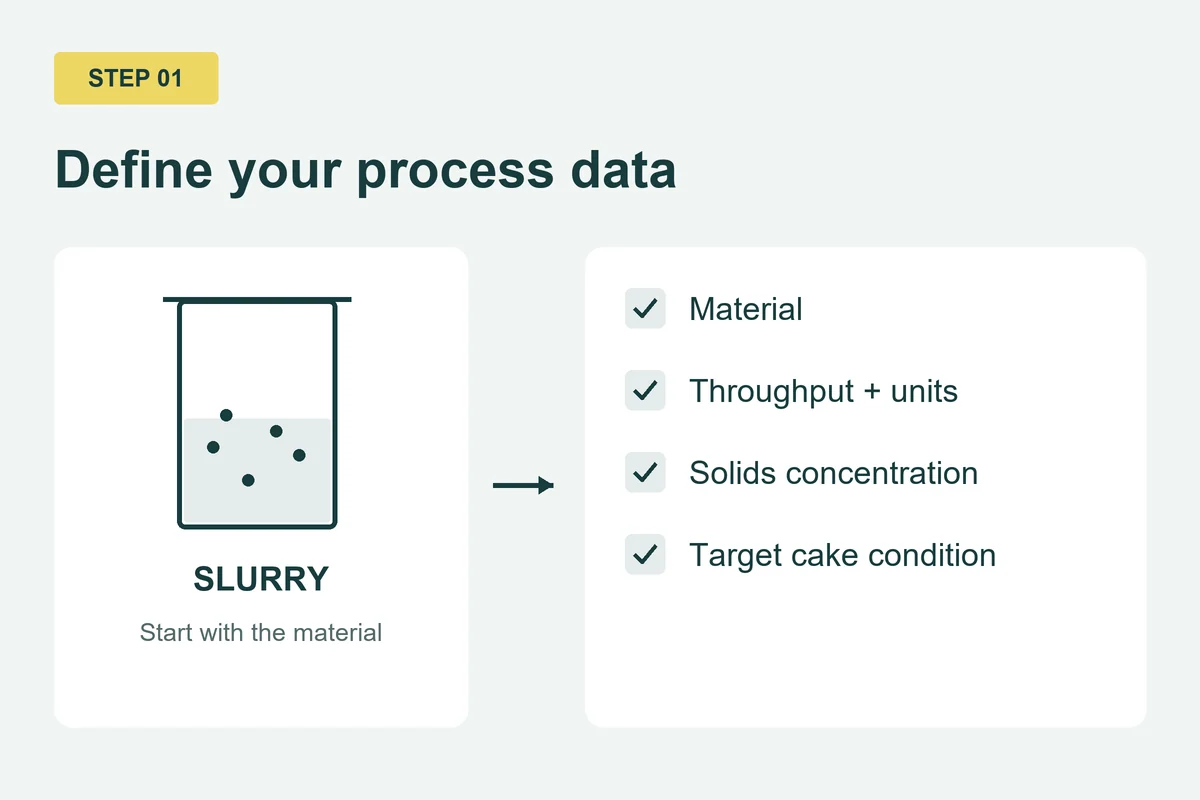
Choosing the right filter press is not simply a matter of selecting a machine size. The performance of a filtration system depends on the slurry characteristics, solids concentration, required cake moisture, filtration area, operating pressure, filter cloth, plate configuration, feed pump, and automation requirements.

We help engineers, plant managers, and industrial buyers understand, compare, select, and optimize filter press systems for real-world solid-liquid separation applications.

From municipal sludge and industrial wastewater to mining tailings, chemical slurries, food processing, ceramics, and other difficult-to-filter materials, our technical resources help you determine which filter press configuration fits your process.

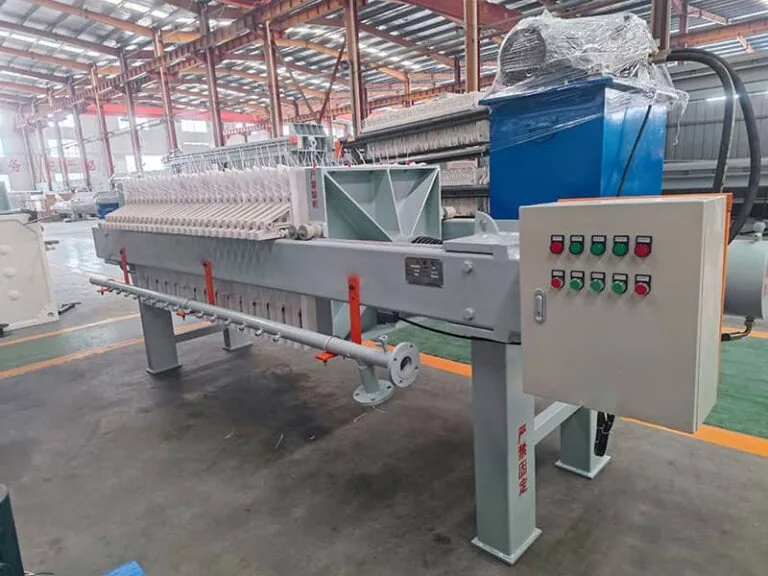
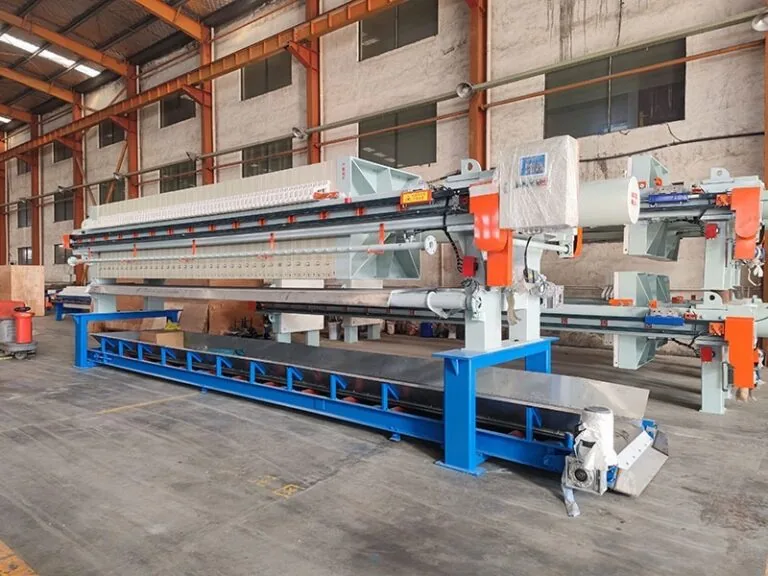
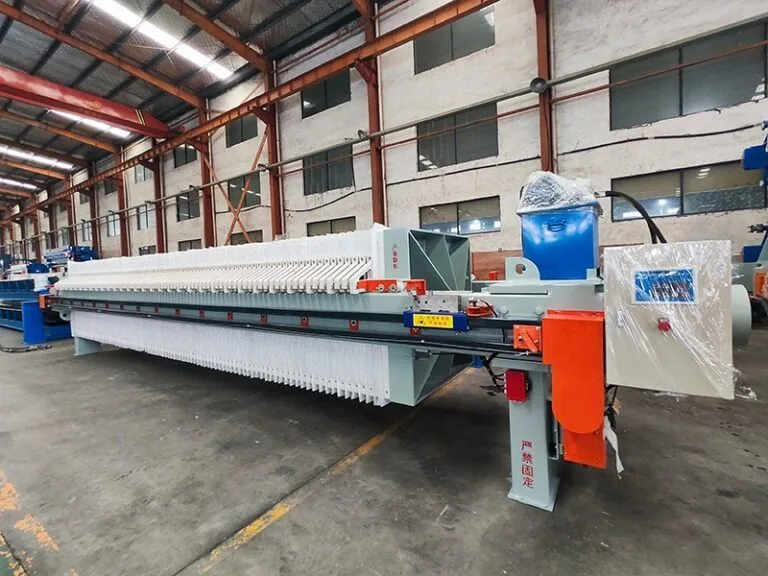
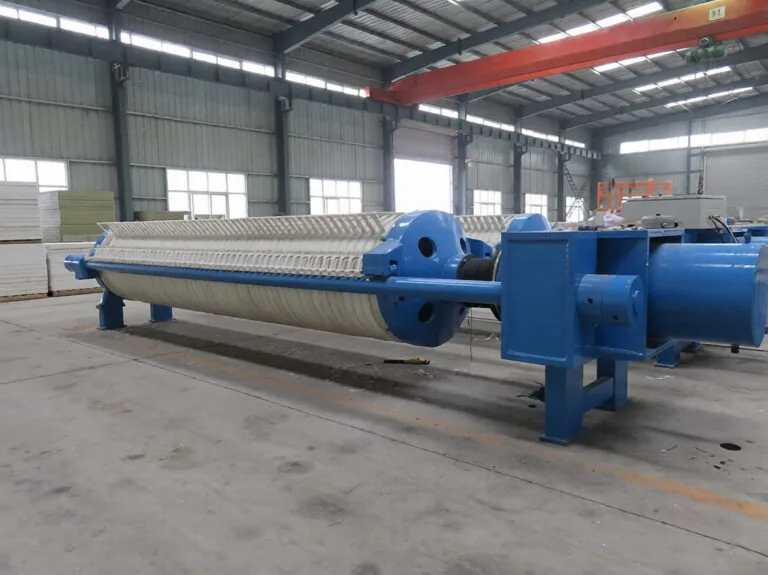
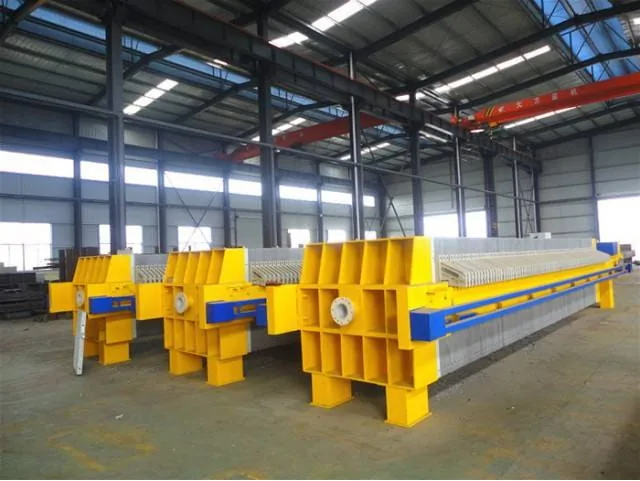
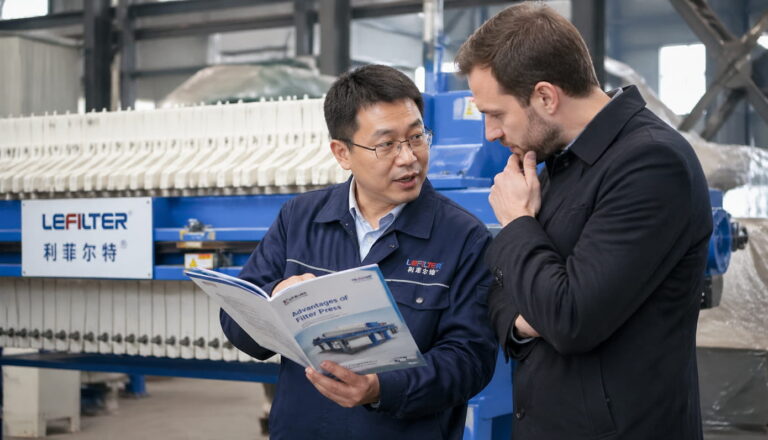
filter press factory view

About us

Reliable Filter Press Manufacturer

We are a professional filter press manufacturer with over 25 years of experience in industrial dewatering and solid-liquid separation equipment.
Our products are exported to more than 30 countries, serving mining, wastewater, chemical, and process industries.

Find the Right Filter Press for Your Application

Different slurries require different filtration strategies.

Before selecting a filter press, consider:

  • What material needs to be filtered?
  • How much slurry needs to be processed?
  • What is the solids concentration?
  • What final cake moisture is required?
  • What filtration pressure is available?
  • How frequently will the press operate?
  • Is manual, semi-automatic, or fully automatic operation required?
  • What filter plate and filter cloth materials are appropriate?
Find the Right Filter Press for Your Application

Choose a Filter Press Type

Explore the main filter press configurations and understand where each type performs best.

Uses membrane squeezing after the initial filtration stage to further reduce cake moisture.

Best for: applications where lower final cake moisture and improved dewatering are important.

A widely used pressure filtration configuration in which recessed plates form filtration chambers.

Best for: wastewater sludge, mining, chemical processing, industrial sludge, and general solid-liquid separation.

Uses alternating filter plates and frames to form individual filtration chambers.

Best for: applications requiring flexible filter media selection and fine filtration.

Designed for applications requiring higher filtration pressure and demanding solid-liquid separation performance.

Best for: mining, tailings, mineral processing, ceramics, sand washing, and difficult dewatering applications.

Combines automated plate opening, cak e discharge, cloth washing, and process controls to reduce manual intervention.

Best for: continuous industrial production and high-throughput operations.

Compact filtration equipment used for laboratory testing, process development, filter media evaluation, and scale-up studies.

Best for: laboratory filtration tests and pilot-scale process development.

Industries We Serve

Filter Press Applications

A filter press can be used across many industries, but the optimal configuration depends heavily on the material being filtered. Our application guides explain the filtration challenges, recommended equipment configurations, and key selection factors for different industries.

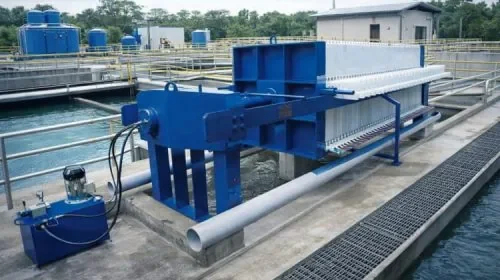
filter press use in Wastewater Treatment

Wastewater Treatment

Filter presses are widely used for dewatering wastewater and treatment sludge before disposal, transportation, or further processing.

how to remove more water after filter press
Sludge Dewatering

Industrial and municipal sludge often requires mechanical dewatering before disposal or downstream treatment.

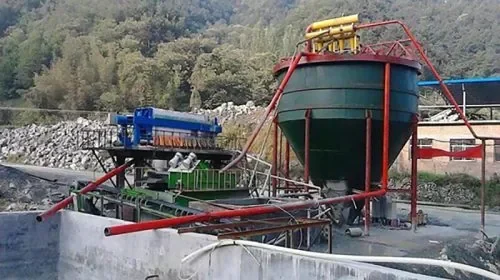
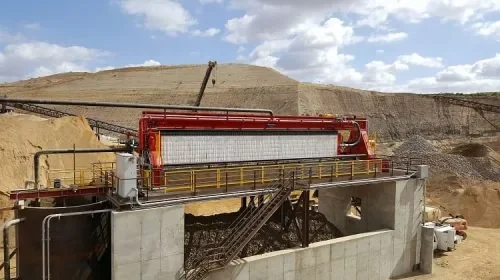
filter press use in mining
Mining & Mineral Processing

Mining applications can involve high concentrations of suspended solids, abrasive materials, and demanding dewatering requirements.

filter press use in chemical industry
Chemical Industry

Chemical filtration may require special consideration of corrosion resistance, temperature, filter media compatibility, and process pressure.

filter press use in food industry

Food & Beverage

Food and beverage applications can require hygienic construction, appropriate filter media, stainless steel components, and precise filtration control.

filter press use in pharma industry
Pharmaceutical Processing

Pharmaceutical filtration requires careful consideration of material compatibility, cleanliness, filtration precision, and equipment configuration.

filter press use in ceramic industry
Ceramics, Stone & Sand Washing

High-solids wastewater from ceramics, stone processing, quarrying, and sand washing can require aggressive dewatering performance.

How to Choose a Filter Press

The most expensive filter press is not necessarily the best filter press for your application. Correct selection starts with the material and process requirements.

1. Identify the Material

Determine what slurry, sludge, suspension, or process liquid needs to be filtered.

Important characteristics include:

  • Solids concentration
  • Particle size
  • Particle distribution
  • Slurry viscosity
  • pH
  • Temperature
  • Chemical composition
  • Abrasiveness
Identify the Material

2. Determine Required Processing Capacity

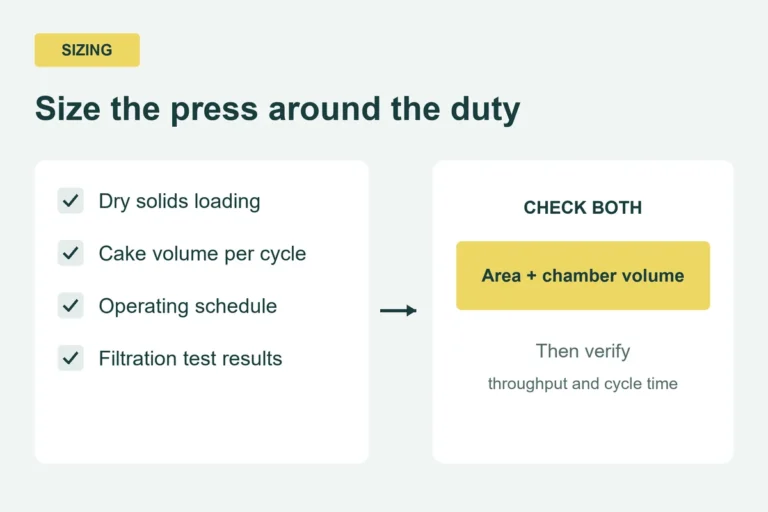
The required filtration capacity affects the filter area, plate dimensions, chamber volume, pump capacity, and overall machine configuration.

Typical questions include:

  • How many cubic meters per hour need to be processed?
  • How many tons of dry solids must be handled per day?
  • How many filtration cycles are required?
  • How long can each filtration cycle take?
Determine Required Processing Capacity

3. Define the Required Cake Moisture

Cake moisture is one of the most important parameters in sludge dewatering.

A lower cake moisture requirement may influence:

  • Filter press type
  • Filtration pressure
  • Membrane squeezing
  • Filter cloth selection
  • Sludge conditioning
  • Cycle time
Define the Required Cake Moisture

4. Select the Appropriate Filter Area

The required filtration area depends on the slurry properties, solids loading, filtration rate, cycle time, and target production capacity.

A larger filter press is not automatically better.

The objective is to select enough filtration area to achieve the required throughput without unnecessarily increasing equipment size and operating costs.

Select the Appropriate Filter Area

5. Select Filter Plates and Filter Cloth

Filter plates and filter cloth directly affect filtration performance.

Consider:

  • Plate material
  • Plate size
  • Chamber depth
  • Cake thickness
  • Cloth material
  • Cloth permeability
  • Filtration precision
  • Chemical compatibility
  • Temperature resistance
Select Filter Plates and Filter Cloth

Filter Press Selection Factors

Use the following checklist when evaluating a filter press:

Selection FactorWhy It Matters
Material to be filteredDetermines equipment configuration
Solids concentrationInfluences filtration capacity
Particle sizeAffects filter cloth selection
Required cake moistureInfluences pressure and filtration method
Processing capacityDetermines required filter area
Filtration pressureAffects cake formation and dewatering
Cake thicknessInfluences chamber configuration
Filter plate materialDetermines chemical and temperature compatibility
Filter clothControls filtration performance
Feed pumpDetermines slurry delivery and pressure
Automation levelDetermines labor and operating efficiency
Operating environmentInfluences materials and equipment protection
Not sure which configuration fits your slurry?

How Does a Filter Press Work?

A filter press separates solids and liquids by applying pressure to a slurry. Although the exact configuration varies, the filtration process generally includes four major stages:

01 — Slurry Feeding

A feed pump sends the slurry into the filter press chambers.

02 — Pressure Filtration

Liquid passes through the filter cloth while suspended solids are retained inside the filtration chambers.

03 — Filter Cake Formation

As solids accumulate, a filter cake develops on the filter cloth and filtration resistance increases.

04 — Cake Discharge

After filtration is completed, the plates are opened and the filter cake is discharged.

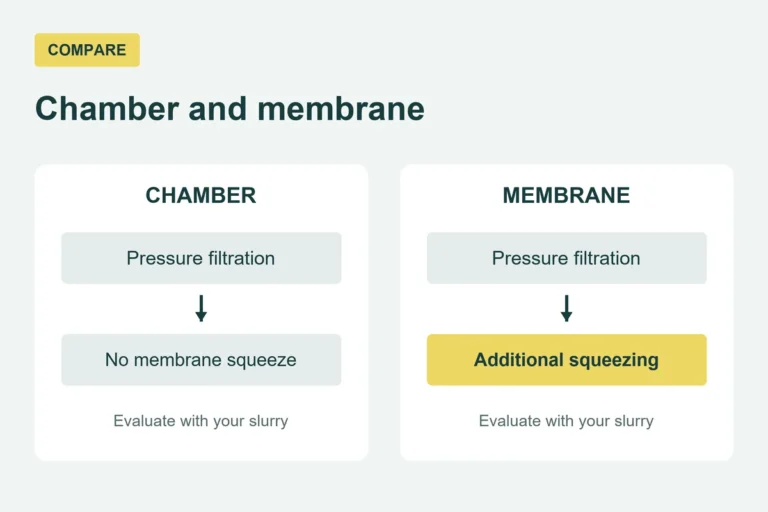
Membrane filter presses can add a secondary squeezing stage to further dewater the cake.

Read the Complete Filter Press Working Principle >
How Does a Filter Press Work

Filter Press Technical Resources

Filter press performance depends on much more than the machine itself. Our technical guides cover the complete filtration system.

Filter Press Components

Filter Press Components

Understand the function of:

  • Filter plates
  • Filter cloth
  • Feed pumps
  • Hydraulic systems
  • Plate shifters
  • Control systems
  • Drip trays
  • Filtrate collection systems
Filter Press Operation

Filter Press Operation

Learn how to operate a filter press safely and efficiently, including:

  • Slurry feeding
  • Pressure control
  • Filtration monitoring
  • Cake discharge
  • Cloth washing
  • Inspection
Filter Press Maintenance

Filter Press Maintenance

Understand routine maintenance requirements for:

  • Filter cloth
  • Filter plates
  • Hydraulic systems
  • Pumps
  • Valves
  • Sensors
  • Control systems
Filter Press Troubleshooting

Filter Press Troubleshooting

Find practical solutions for common problems such as:

  • Wet filter cake
  • Cloudy filtrate
  • Filter press leakage
  • Low filtration pressure
  • Long filtration cycles
  • Filter cloth blinding
  • Uneven cake formation
  • Plate shifting problems

Filter Press Comparison Guides

There is no single filter press configuration that is ideal for every application. Use our comparison guides to understand the differences before selecting equipment.

Membrane vs Chamber Filter Press

Membrane vs Chamber Filter Press

Understand differences in:

  • Filtration process
  • Cake moisture
  • Operating pressure
  • Equipment complexity
  • Operating cost
  • Typical applications
Filter Press vs Belt Filter Press

Filter Press vs Belt Filter Press

Compare:

  • Dewatering performance
  • Cake moisture
  • Continuous vs batch operation
  • Footprint
  • Labor requirements
  • Maintenance
  • Application suitability
Filter Press vs Screw Press

Filter Press vs Screw Press

Compare the two technologies for sludge dewatering and industrial solid-liquid separation.

Filter Press vs Centrifuge

Filter Press vs Centrifuge

Understand the differences in:

  • Separation principle
  • Cake moisture
  • Energy consumption
  • Maintenance
  • Sludge characteristics
  • Capital investment

Filter Press Engineering & Customization

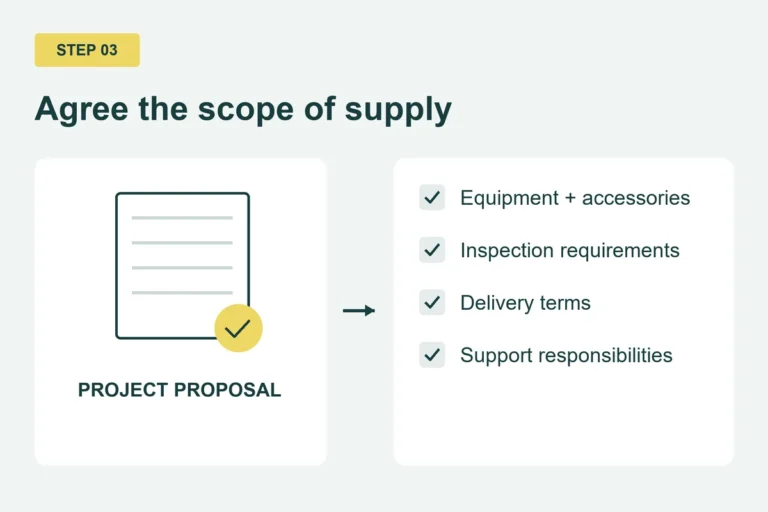
A filter press should be configured around the process—not selected solely from a standard model number. Depending on the application, the system can be configured around factors such as:

Filtration Area

Select the appropriate filtration area based on slurry characteristics, required throughput, and filtration cycle.

Plate Size

Different plate dimensions allow the equipment to be matched to different processing capacities and installation conditions.

Filter Plate Material

Common options can include polypropylene and stainless steel configurations depending on the application.

Filter Cloth

Filter cloth material, weave, permeability, and filtration precision should be selected according to the slurry.

Operating Pressure

The required filtration pressure depends on the material and desired dewatering performance.

Automation

Depending on process requirements, a system may include:

  • Automatic plate shifting
  • Hydraulic plate closing
  • Drip trays
  • Filter cloth washing
  • Belt conveyors
  • PLC control
  • Automatic cake discharge
Filter Press Engineering & Customization

From Slurry Data to Filter Press Selection

A reliable filter press recommendation should begin with process data.

Step 1 — Understand Your Material

Provide:

Material / Slurry:
What are you filtering?

Solids Concentration:
Approximately what percentage of solids are present?

Particle Size:
What is the approximate particle size distribution?

Understand Your Material

Step 2 — Define Your Production Requirement

Provide:

Processing Capacity:
m³/h, m³/day, tons/day, or another relevant unit.

Operating Hours:
How many hours per day will the system operate?

Required Cake Moisture:
What moisture level do you need after filtration?

Define Your Production Requirement

Step 3 — Define Your Operating Conditions

Provide:

  • Feed pressure
  • Temperature
  • pH
  • Chemical characteristics
  • Available installation space
  • Power supply
  • Automation requirements
Define Your Operating Conditions

Step 4 — Receive a Recommended Configuration

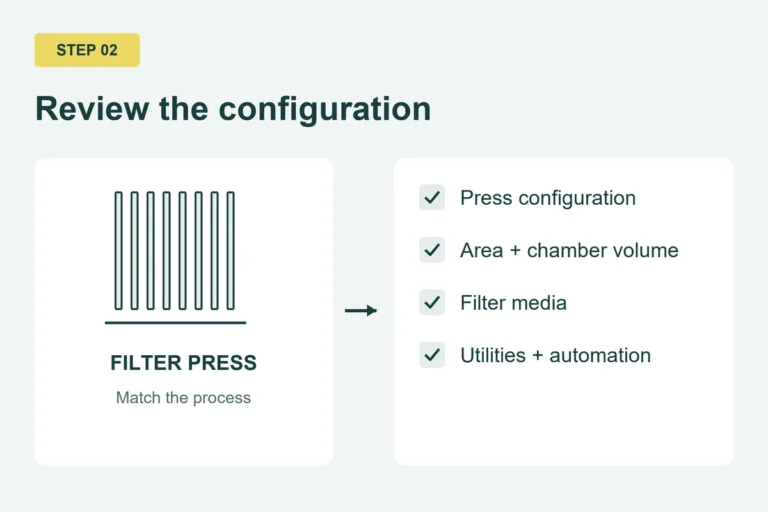
Based on the process information, the appropriate filter press configuration can be evaluated in terms of:

  • Filter press type
  • Filter area
  • Plate size
  • Chamber volume
  • Filter plate material
  • Filter cloth
  • Feed pump
  • Automation system
  • Auxiliary equipment
Receive a Recommended Configuration

Filter Press System Components

A complete filtration system may include much more than the filter press itself. Explore the main components:

Filter Plates

Filter Plates

The plates form the filtration chambers and determine chamber volume and cake thickness.

Filter Plate Guide >
Filter Cloth

Filter Cloth

The filter cloth separates the solids from the liquid and strongly influences filtration performance.

Filter Cloth Guide >
Feed Pump

Feed Pump

The feed pump delivers slurry into the filter press and plays an important role in achieving the required filtration pressure.

Feed Pump Guide >
Hydraulic System

Hydraulic System

The hydraulic system provides the closing force required to seal the filter plate pack during filtration.

Hydraulic System Guide >
Filter Press Control System

Control System

PLC-based controls can automate plate movement, hydraulic operation, cloth washing, cake discharge, and other process functions.

Automation Guide >

Filter Press Tools & Calculators

Engineering calculations can make equipment selection more accurate. We are developing practical tools for engineers and plant operators, including:

Filter Press Sizing Calculator

Filter Press Sizing Calculator

Estimate the required filtration area based on process capacity and filtration conditions.

Filter Press Sizing Calculator >
Filter Area Calculator

Filter Area Calculator

Calculate approximate filtration area requirements.

Use the Filter Area Calculator >
Filter Cake Volume Calculator

Filter Cake Volume Calculator

Estimate cake volume based on chamber configuration and filtration parameters.

Filter Cake Volume Calculator >
Filter Press Capacity Calculator

Filter Press Capacity Calculator

Estimate potential processing capacity based on equipment configuration and operating conditions.

Filter Press Capacity Calculator >

Why Filter Press Selection Should Start With the Process

A filter press should never be selected based only on the desired machine capacity.

Two slurries with the same flow rate may require completely different filtration systems because their:

  • solids concentration,
  • particle size,
  • viscosity,
  • compressibility,
  • chemical composition,
  • filtration resistance,
  • and required cake moisture

can be very different.

That is why proper filter press selection starts with process data, not simply equipment dimensions.

Why Filter Press Selection Should Start With the Process

Frequently Asked Questions

A filter press is a pressure filtration system used to separate solids from liquids in slurries. It is commonly used for sludge dewatering, wastewater treatment, mining, chemical processing, food processing, ceramics, and other industrial solid-liquid separation applications.

Slurry is pumped into filtration chambers. Liquid passes through the filter cloth while solid particles are retained and form a filter cake. Once filtration is complete, the plates open and the cake is discharged.

Start with the material characteristics, solids concentration, required processing capacity, target cake moisture, filtration pressure, cycle time, filter plate configuration, filter cloth, and desired automation level.

A chamber filter press performs pressure filtration within recessed chambers. A membrane filter press adds a secondary squeezing stage using flexible membrane plates to further compress the filter cake.

Cake moisture can be influenced by slurry conditioning, filtration pressure, filter cloth selection, cake thickness, filtration time, and membrane squeezing. The optimal approach depends on the specific slurry.

Possible causes include unsuitable filter cloth, insufficient pressure, incorrect slurry conditioning, excessive cake thickness, short filtration time, poor plate sealing, or slurry characteristics that limit dewatering.

Cloudy filtrate may result from damaged or incorrectly installed filter cloth, poor sealing, unsuitable cloth permeability, excessive feed rate, or fine particles passing through the filter media.

The required filter area depends on slurry characteristics, solids loading, filtration rate, cycle time, and required production capacity. A process-based calculation is more reliable than selecting a press based only on flow rate.

Need Help Selecting a Filter Press?

The right filter press can improve dewatering performance, reduce unnecessary equipment costs, simplify operation, and produce a more consistent filter cake.

Tell us what you are trying to filter. Our filter press selection process starts with your material and process conditions, not a generic equipment recommendation.

Send us:

  • Material or slurry name
  • Processing capacity
  • Solids concentration
  • Required cake moisture
  • Operating temperature
  • pH or chemical characteristics
  • Available filtration pressure
  • Required automation level

We can then evaluate the appropriate filter press type, filtration area, plate configuration, filter cloth, feed pump, and auxiliary equipment for your application.

Contact Form Demo
Scroll to Top